Roles and Responsibilities: Lean-Agile Centre of Excellence

LACE (Lean-Agile Center of Excellence) is a small agile team dedicated to implementing the SAFe Lean-Agile way of working in an organization. It proves to be one of the key differentiators between organizations who only practice Agile in name to organizations fully committed to getting the best outcomes of Lean-Agile practices. In this blog, we will read in detail about what exactly LACE is and what is its responsibilities.
What is LACE?
Across our journey, we have realized how important it is to have leaders within the organization who can lead the transformation towards reaping the benefits of SAFe. The challenge towards that is people most qualified to fill that role already have full-time responsibilities in their current role. This is where the SAFe implementation promotes building the LACE, staffed with people whose primary task is implementing and sustaining the change.
Effective LACEs are made up of people that have some common characteristics. It is beneficial to identify people within the organization who already exemplify the following characteristics:
- Respect of peers
- Motivated by helping others
- Pragmatic optimism
Roles and Responsibilities of LACE
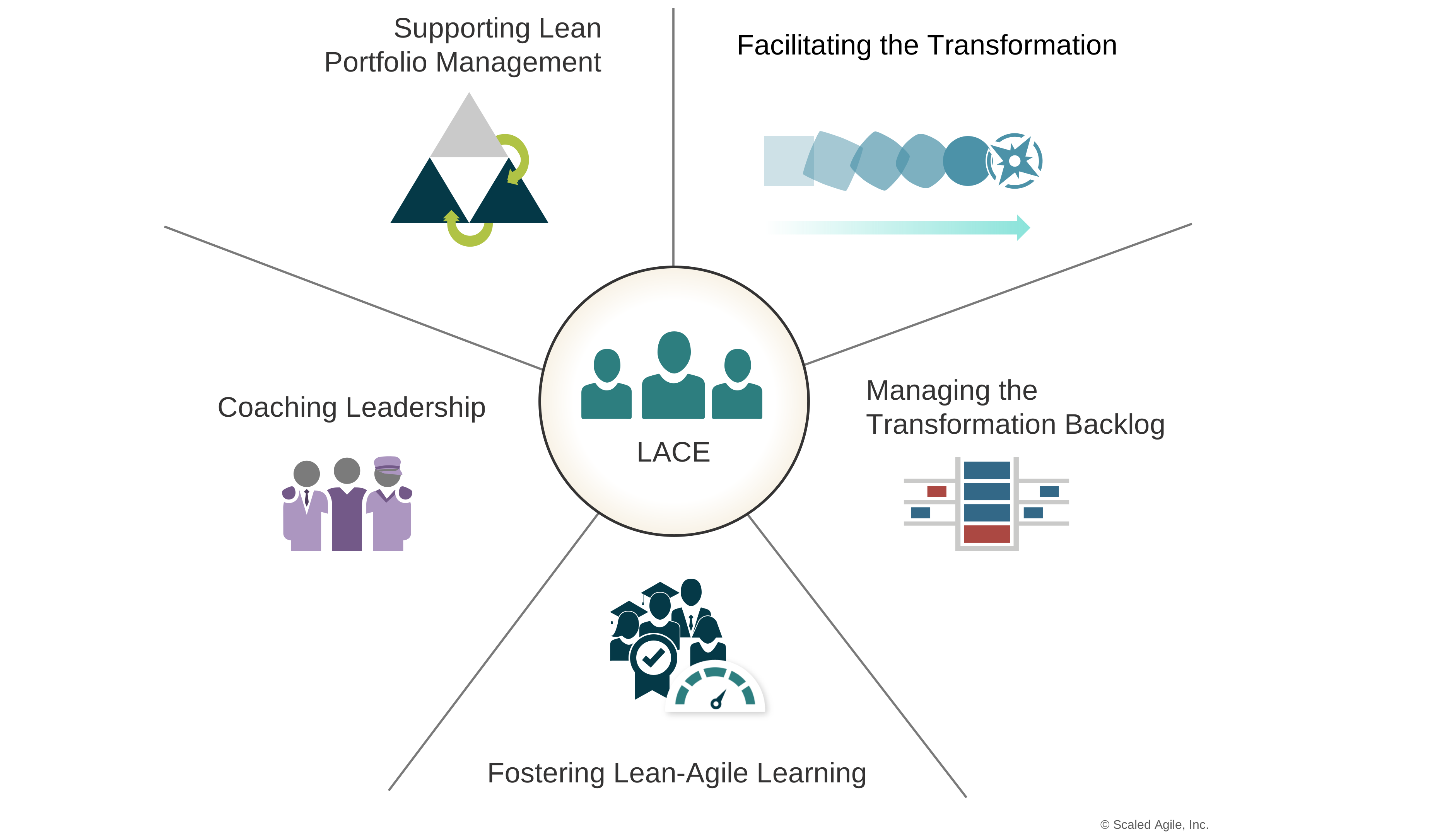
The responsibilities of LACE can be group under five main areas as shown in the below figure, which enable the LACE to serve the whole of SAFe transformation throughout all roles and levels of organization.
First Responsibility: Facilitating the transformation
It is important to remember that organizations do not transform themselves. It requires careful and persistent attention to even the smallest processes and details.
1. Maintain a LACE mission
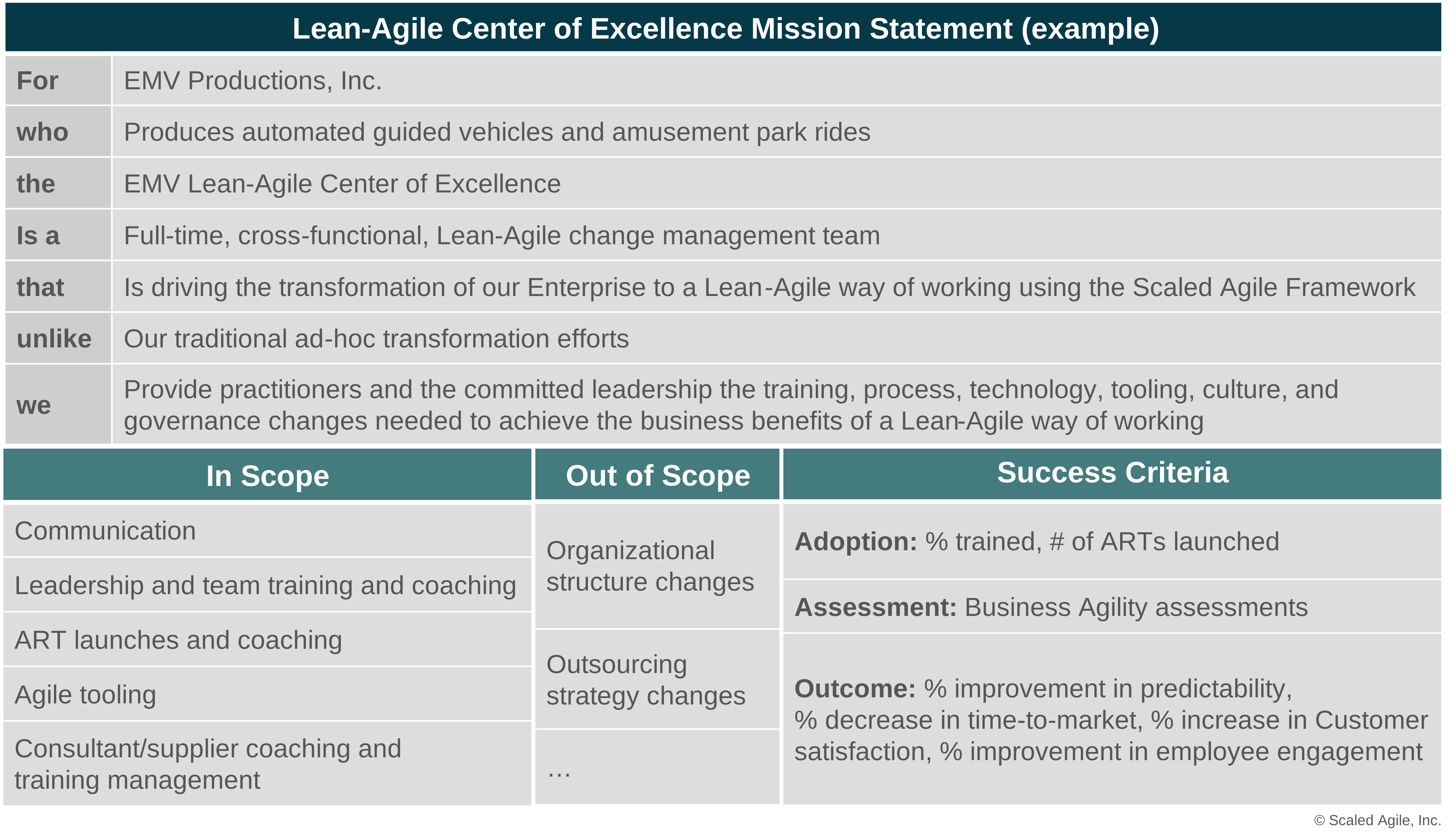
There is a general feeling that when teams agree on a mutual mission together, they tend to perform better. IT is the LACEs responsibility to maintain a LACE mission. An example is shown below
2. Be an exemplar agile team
The LACE should operationally act as an Agile Team, which allows them to plan, inspect and adapt with the ARTs. To achieve this, similar roles like Product Owner, Scrum Master are required to be present in the LACE.
3. Illustrate SAFe expertise
LACE needs to be transparent about its own SAFe journey. They should become SPCs, use their team to work through experiments on improvement and other relevant and necessary important tasks.
Second Responsibility: Managing the Transformation Backlog
An important task for the LACE is to manage the flow of work and improve efficiency.
1. Manage a shared backlog
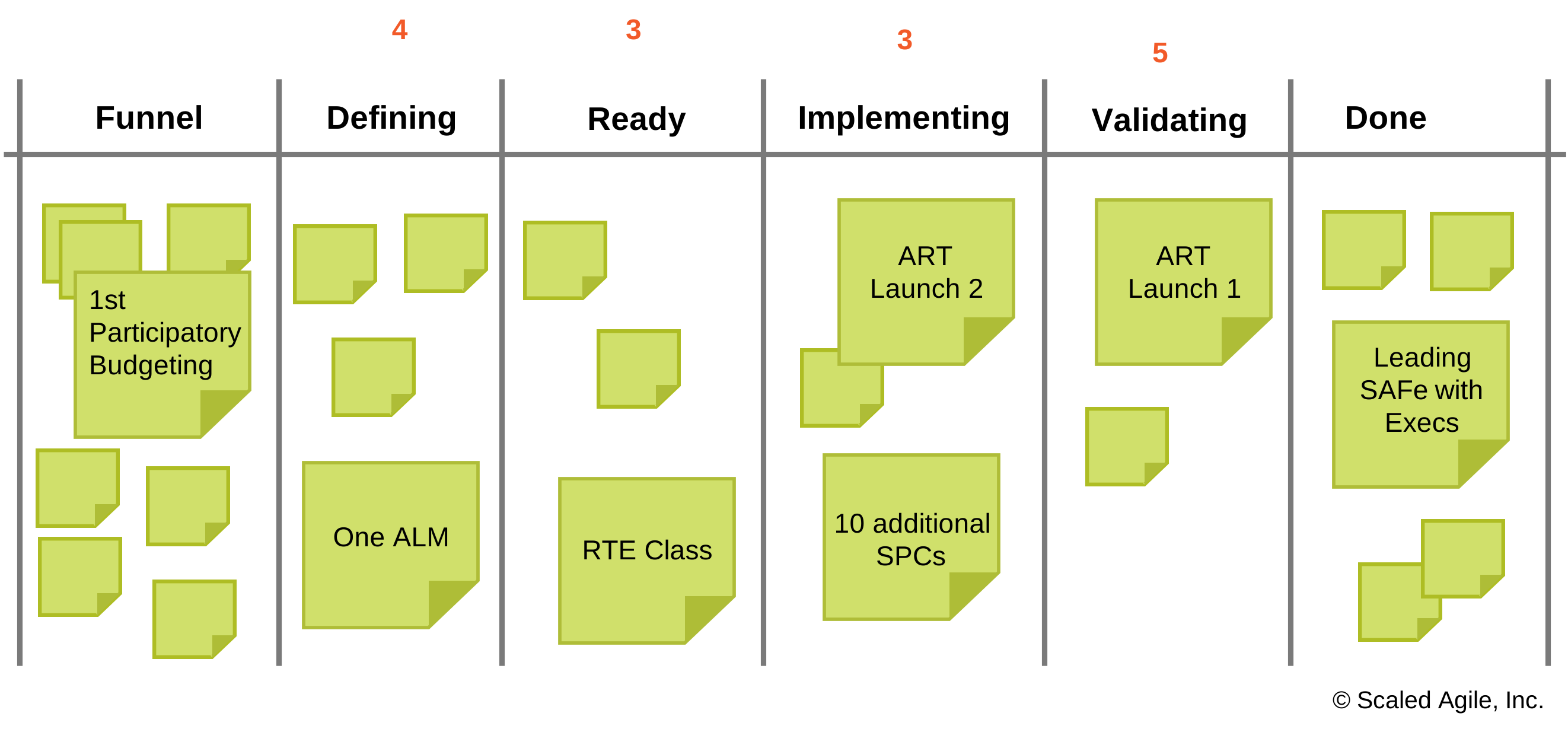
Post formation of LACE, there is a general inclination in the organization to accelerate progress and work through its entire backlog. However, it might be harmful and should be avoided. Instead, LACE should empower the organization to generate short term wins by defining and launching ARTs.
2. Create a baseline
LACE must understand where a portfolio is on the road to business agility. This is where the business agility assessment helps the LACE. They should baseline the assessment at the start and use it for measurement and progress tracking.
3. Identify transformation OKRs
As the gains continue to build with each iteration, the LACE must partner with other SPCs and value stream managers to identify OKRs. These OKRs will be used to measure the outcome of the transformation itself.
Third Responsibility: Fostering Lean-Agile Learning
1. Inviting new thoughts
LACE members should invite feedback from those affected by the transformation journey. They should embrace conflicting opinions and strong pushback helping them to learn and grow their transformation with new findings.
2. Creating learning plans
The LACE in partnership with other SPCs, people managers, HR, and enterprise learning should create learning plans that effectively onboard employees and suppliers into the new ways of working and mature their role-based competencies over time.
3. Measuring learning
LACE members utilize quantitative and qualitative measurement to maintain feedback from learners, identify gaps in offerings that may require new learning offerings, and trend over time numbers trained related to role, ARTs, and Portfolio.
Fourth Responsibility: Coaching Leadership
1. Facilitate leadership workshops
The LACE should often facilitate Leading SAFe and Leading in the Digital Age cohorts and after that, they continue to organize and facilitate leadership workshops, from educational series to vision and strategy alignment sessions.
2. Participate in organizational programs
To enable the new skills required to lead in the digital age, LACE members partner and participate in existing organizational leadership programs, aligning transformation messaging to corporate strategies for retaining and growing top talent.
3. Serve the transformed
To avoid becoming ‘ivory tower’ agilists, the LACE utilizes their own learnings, coaching relationships, and practitioner COPs to maintain their organizational credibility.
Fifth Responsibility: Supporting the LPM
1. Facilitate LPM events
LACE members must facilitate Participatory Budgeting, Portfolio Reviews, and Portfolio Sync, gathering inputs from the VMO, RTEs, STEs, and Epic Owners. As non-decision makers, The LACE members have a unique and non-threatening way of facilitating these discussions with context.
2. Provide supporting data
The LACE should serve as Epic Owners to instantiate or enhance the transformation. These may include tool or policy change recommendations or a business case for new infrastructure needs.
3. Partner with VMO
The VMO, like the LACE, leverages specialized skills, knowledge, and relationships while transitioning themselves and the portfolio to a new Lean-Agile way of working. The VMO will have operational and financial data that the LACE requires to succeed. The VMO and the LACE will often partner in the activities below or even assume responsibility when an organization has chosen not to form a VMO


Comments
Post a Comment