A closer look at SAFe’s Principles

SAFe is based on ten fundamental concepts that have evolved from Agile principles and methods, Lean product development, systems thinking, and observation of successful enterprises. Each is described in detail in an article by that principle’s name. In addition, the embodiment of the principles appears throughout the Framework. They are summarized in the following sections after the detailed image presented below.
SAFe Principles

Principle 1: Take an economic view
The goal of Lean is to achieve the shortest sustainable lead time with the best quality and value. Realizing this goal requires understanding of the economics of a mission. Without considering it, even a perfectly capable system may cost too much to develop.
Therefore, the entire chain of leadership must understand the economic impact of their choices. This makes up SAFe’s first Lean-Agile principle which is to take an economic view. Economics should inform and drive all decisions at all levels in a organization.
The two practices essential to achieving the most optimal economic outcomes via Lean-Agile methods are:
- Deliver early and often
- Apply an economic framework
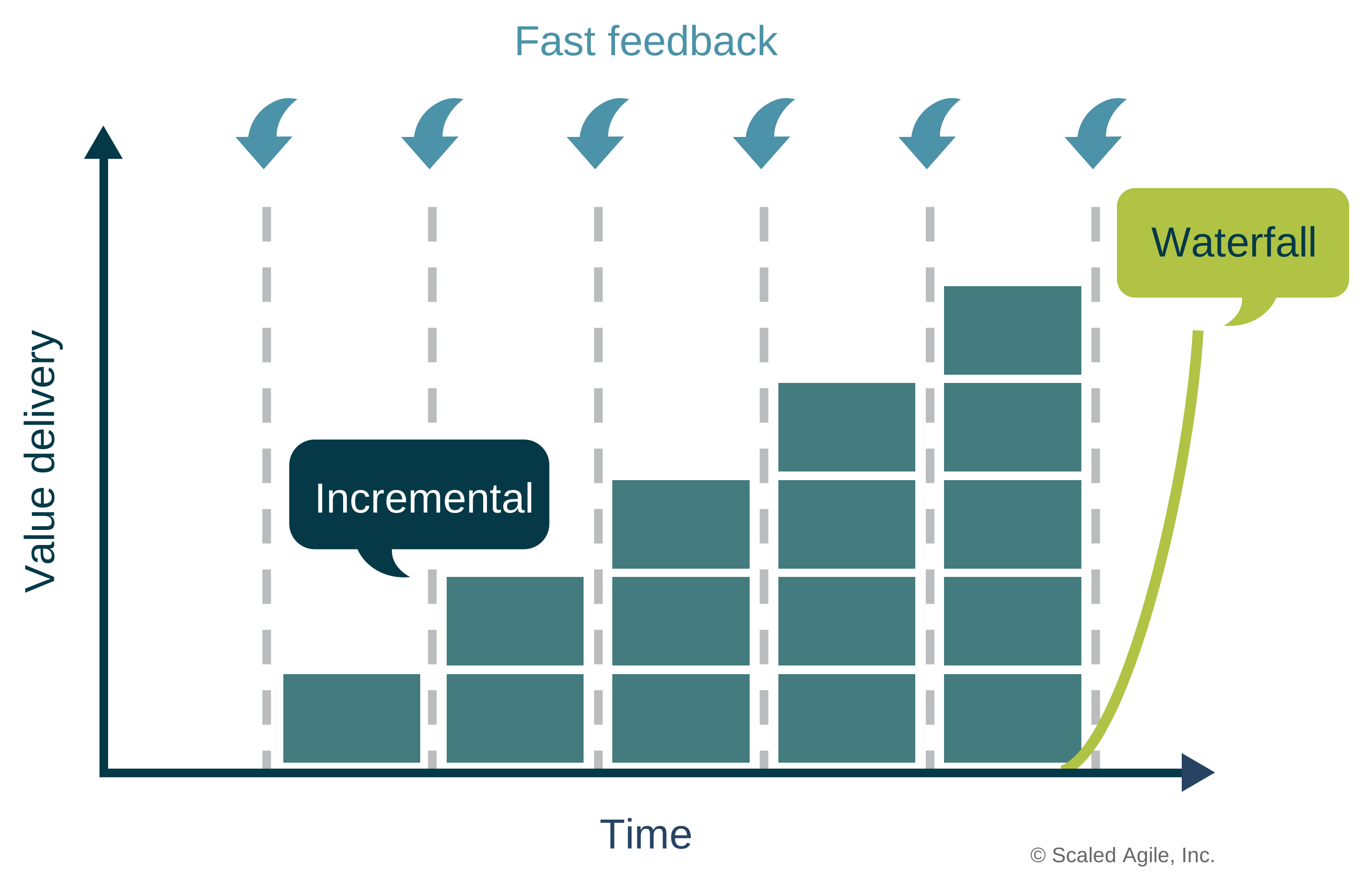
By choosing a Lean-Agile path, organizations embrace a model based on incremental development and early and continuous delivery. The ability to deliver early and often has a direct economic benefit, as shown in the below figure.
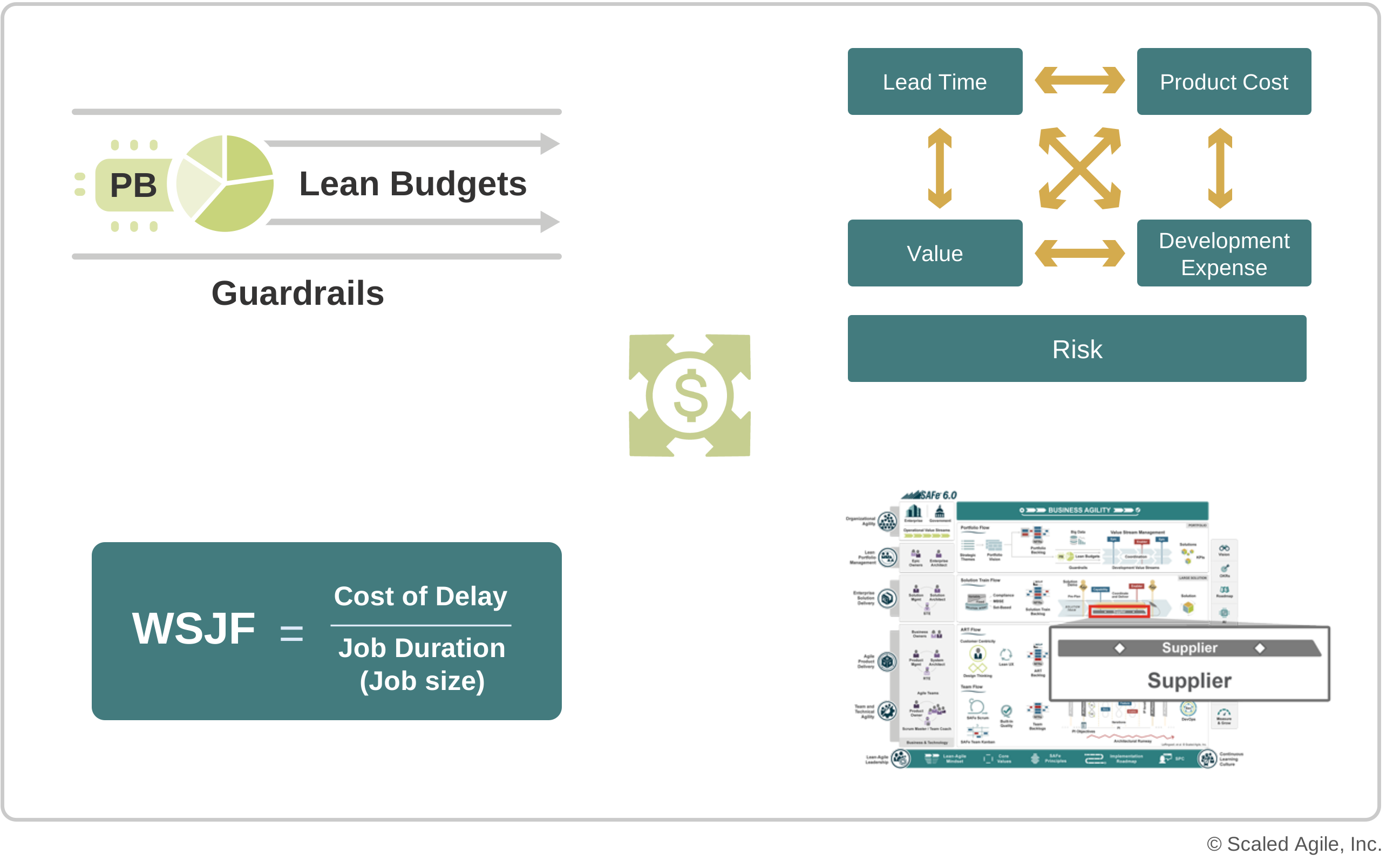
But as important it is to delivery early and often, it does not paint the complete picture towards achieving the first principle. It also requires an economic framework – a set of decisions and guidelines that align everyone with the financial objectives of the organization. The following figure shows the four primary elements which make up the economic framework of SAFe’s.
Principle 2: Apply systems thinking
System thinking is one of the four foundational bodies of knowledge that inform SAFe. It takes a holistic approach to solution development, incorporating all aspects of a system and it’s environment into the system’s design, development and deployment and maintenance.
The three primary aspects of design thinking are illustrated in the below figure:
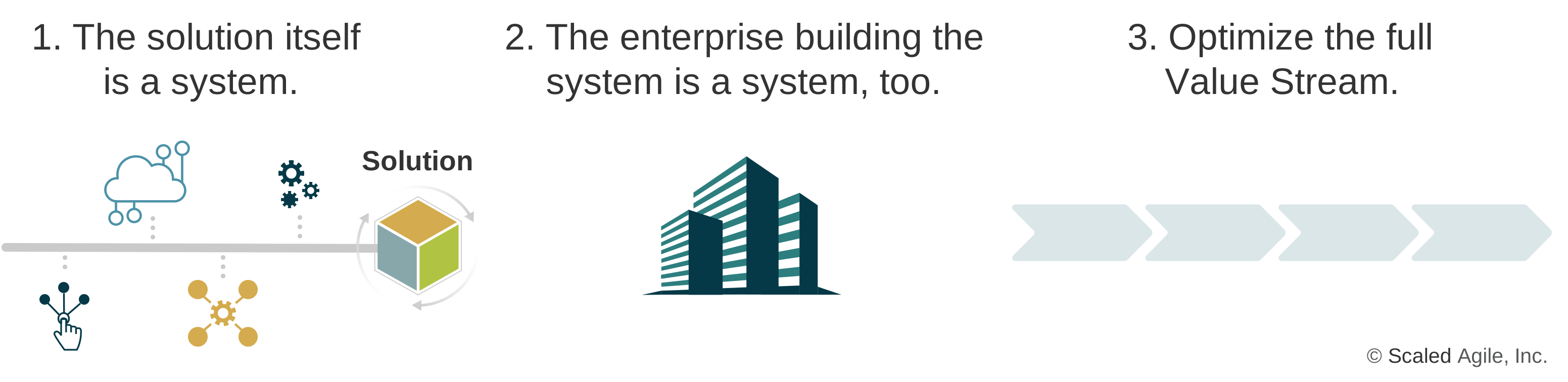
Understanding these concepts is crucial for leaders and teams to navigate the complexity of solution development. Each is described below:
- The Solution itself is a system – Solutions are represented by the SAFe Solution object, the tangible object that delivers the end user value and is the subject of each development value stream—the application, satellite, medical device, or website.
- The Enterprise building a system is a system, too – The people, management and the processes that build the system are also a system. Otherwise, the components of the organization building the system will optimize locally and become selfish, limiting the speed and quality of value delivery.
- Understand and optimize the Full development value stream – A SAFe portfolio is a collection of development value streams, each delivering a single or more than one solutions to the market. This explain why development value streams are fundamental to SAFe.
Principle 3: Assume variability; preserve options
Technical and market variability are present throughout the developmental process, making it an inherently uncertain process. System developers are naturally inclined towards reducing variability as quickly as possible.
Variability is neither good nor bad – it is just what it is. It is the economics associated with the timing and type of variability that determines outcomes. The goal is to manage variability, and preserve options, providing the controls and flexibility teams need to build great solutions. We will have a look at managing variability and preserving options with set-based design.
But before that, we must understand that development occurs in an uncertain world. Traditional developmental practices drive developers to converge on a “point-based” single option and then modify it until it meets the system intent. However, probability that it is the correct starting point is low.
Preserve options with a Set-Based design
Set-Based design is a far better approach where developers initially cast a wider design net. After that, they continuously evaluate economic and technical trade-offs—typically exhibited by the objective evidence presented at integration-based learning points. They eliminate the weaker options over time and ultimately converge on a final design based on the knowledge gained to that point, as shown in the following figure.
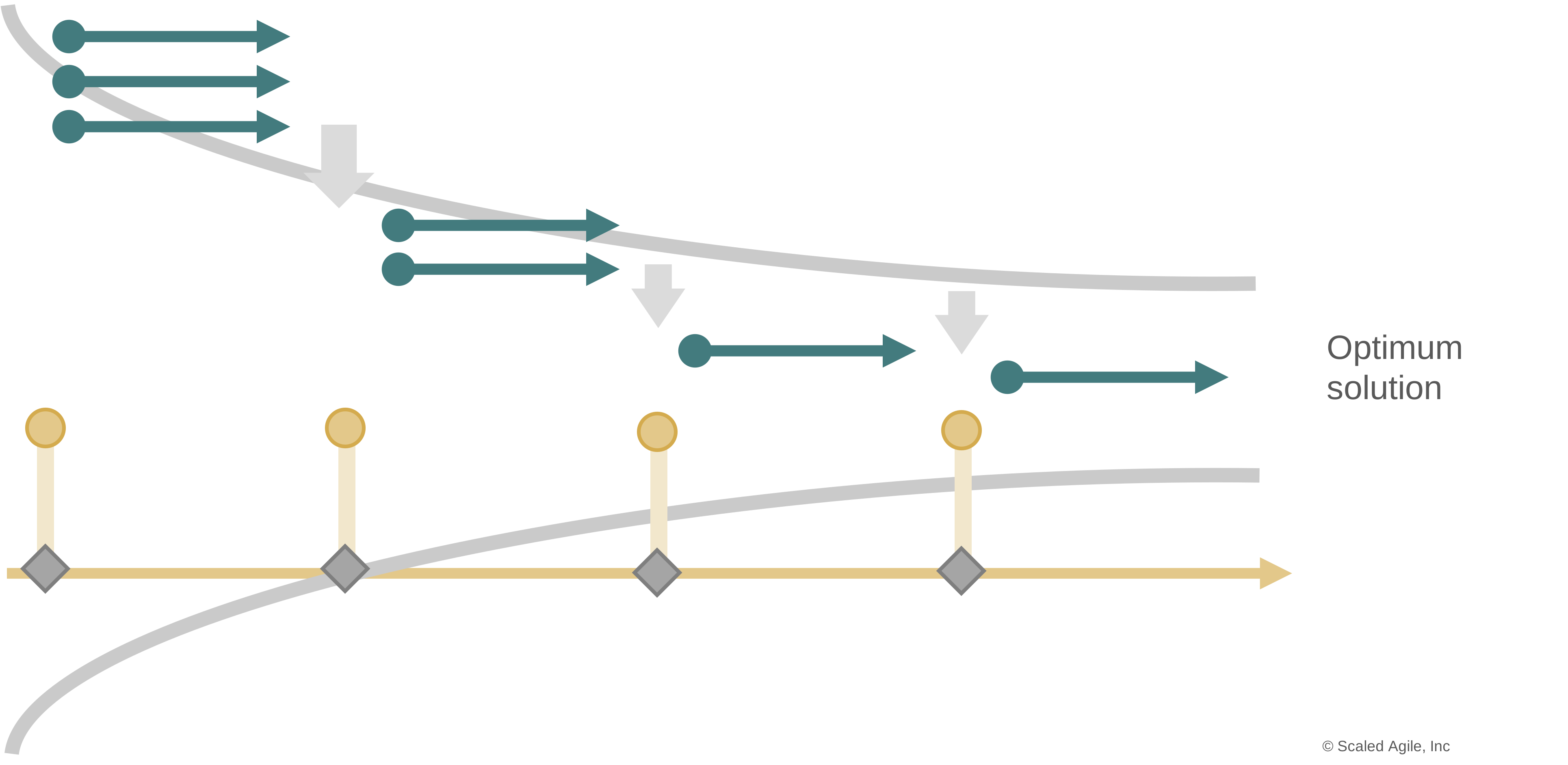
This process leaves the design options open for as long as possible, converges when necessary, and produces more optimal technical and economic outcomes.
Principle 4: Build incrementally with fast, integrated learning cycles
The plan-do-check-adjust (PDCA) cycle is the mechanism for gaining faster feedback and controlling the variability of solution development. This ensures that development begins with establishing a systematic way to accelerate learning. As shown in the below figure, PDCA is an iterative cycle. Thus, regardless of the results, every experiment creates new insights that help form the hypothesis for learning to be gained or uncertainty to be resolved.
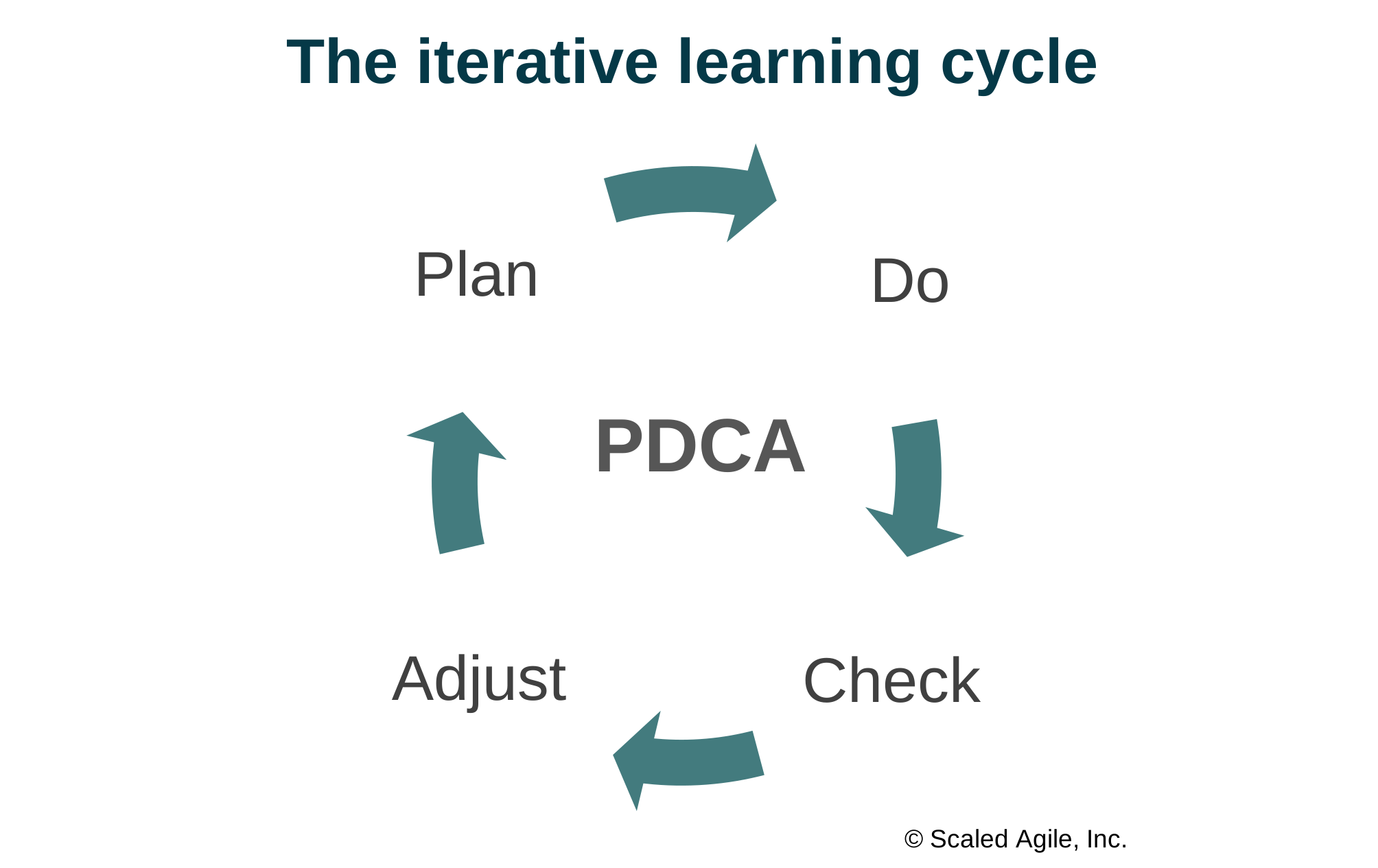
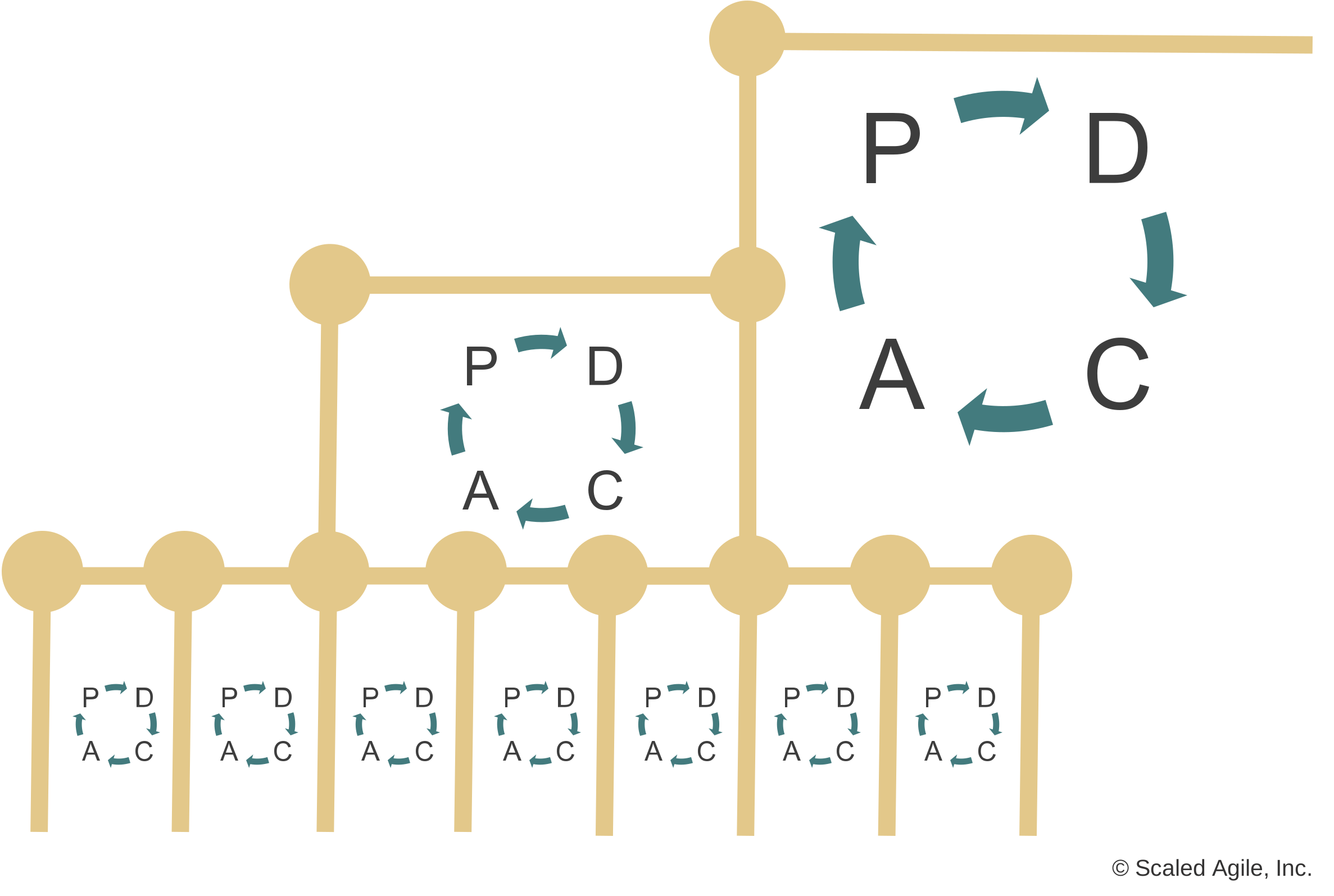
Establishing shorter PDCA cycles enables more frequent integration points. In complex systems development, local integration points are used to ensure that each system element or capability meets its responsibilities to contribute to the solution Intent. These integration points accelerate the learning process. However, development cannot proceed any faster than the slowest learning loop. Synchronizing the learning loops enables faster and more frequent integrations.
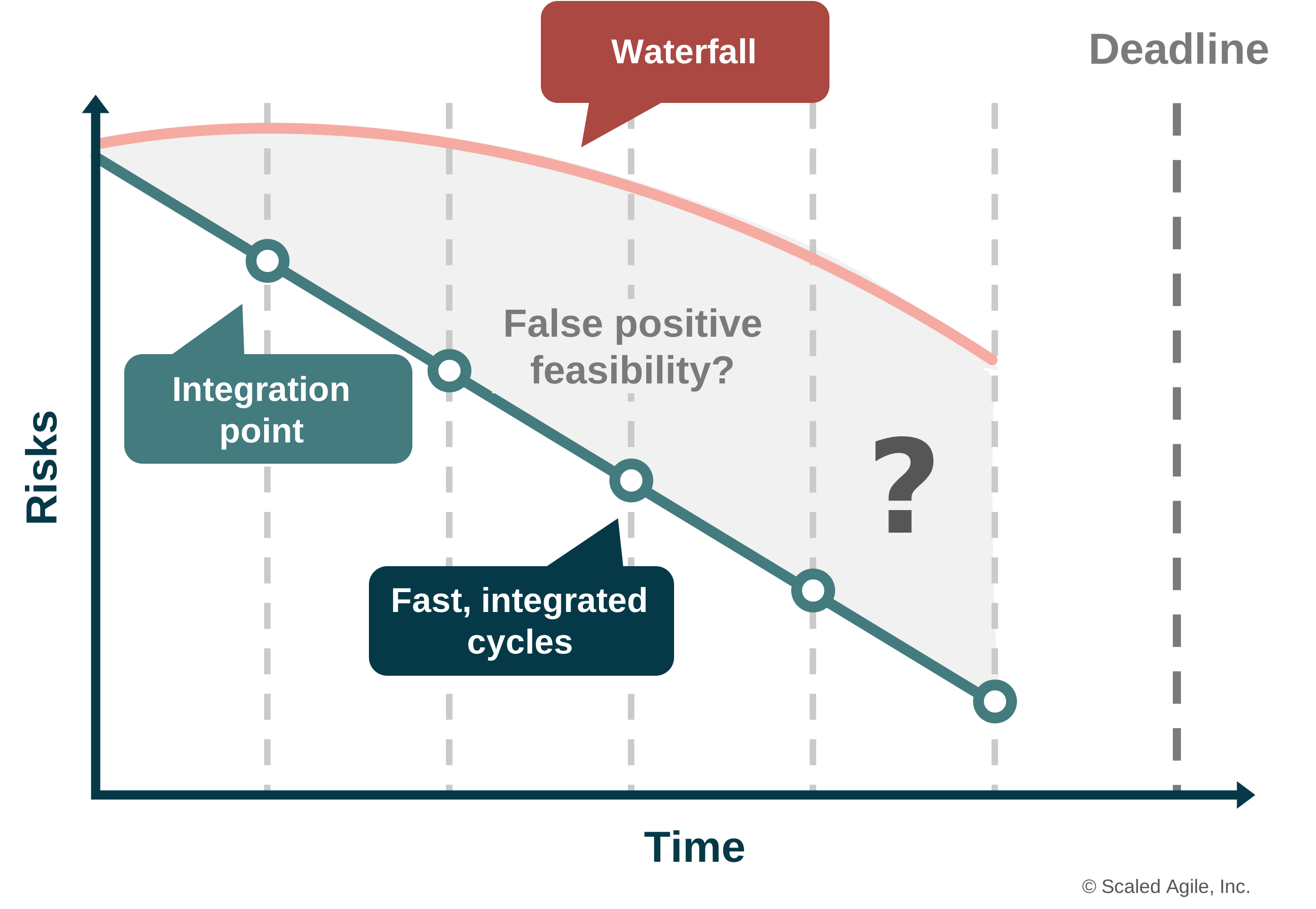
It is important to remember that lack of integration points can create a false sense of security. This results in the belief that linear progress is being made when the problems are hidden in reality, only to be discovered later. This creates what is termed as ‘false positive feasibility,’ i.e. the belief that the solution will be delivered as planned, whereas, in reality, that is not the case, as the below shown figure illustrates.
Principle 5: Base milestones on objective evaluation of working systems
Developing today’s large systems require substantial resources and stakeholders must collaborate in ways that help ensure the potential to realize the benefit. The industry has generally applied a sequential phase-gated (waterfall) development process to address this challenge, measuring and controlling progress through a series of specific milestones. These phase-gate milestones are not arbitrary. They follow a seemingly logical and sequential process: discovery, requirements, design, development, test, and delivery. Of course, it hasn’t always worked out all that well as illustrated below.
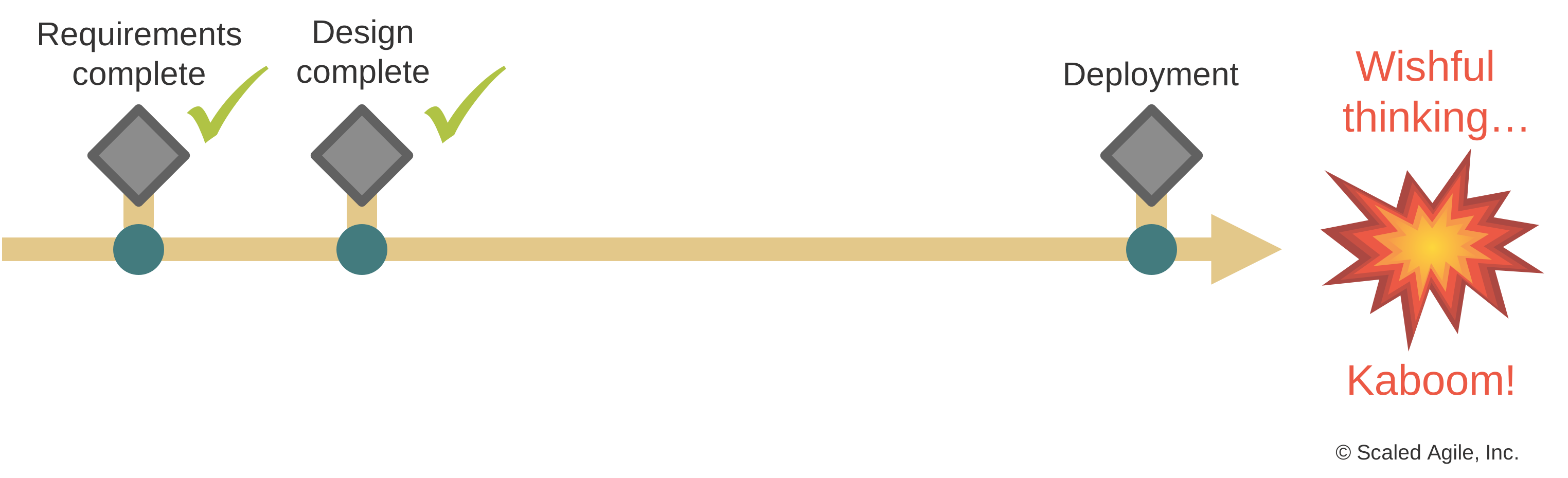
The cause of this is due to failure in recognizing four critical errors in the assumption that phase gates reveal real progress and mitigate risk.
Clearly, the phase-gated model does not mitigate risk as intended. A different approach is needed. This principle — build incrementally with fast, integrated learning cycles — provides a strategy to address this dilemma. In this approach, the system is built in increments, each of which is an integration point. Each integration point demonstrates evidence of the feasibility of the solution under development. Unlike phase-gated development, every milestone involves a portion of each step—requirements, design, development, testing—producing a full increment of value.
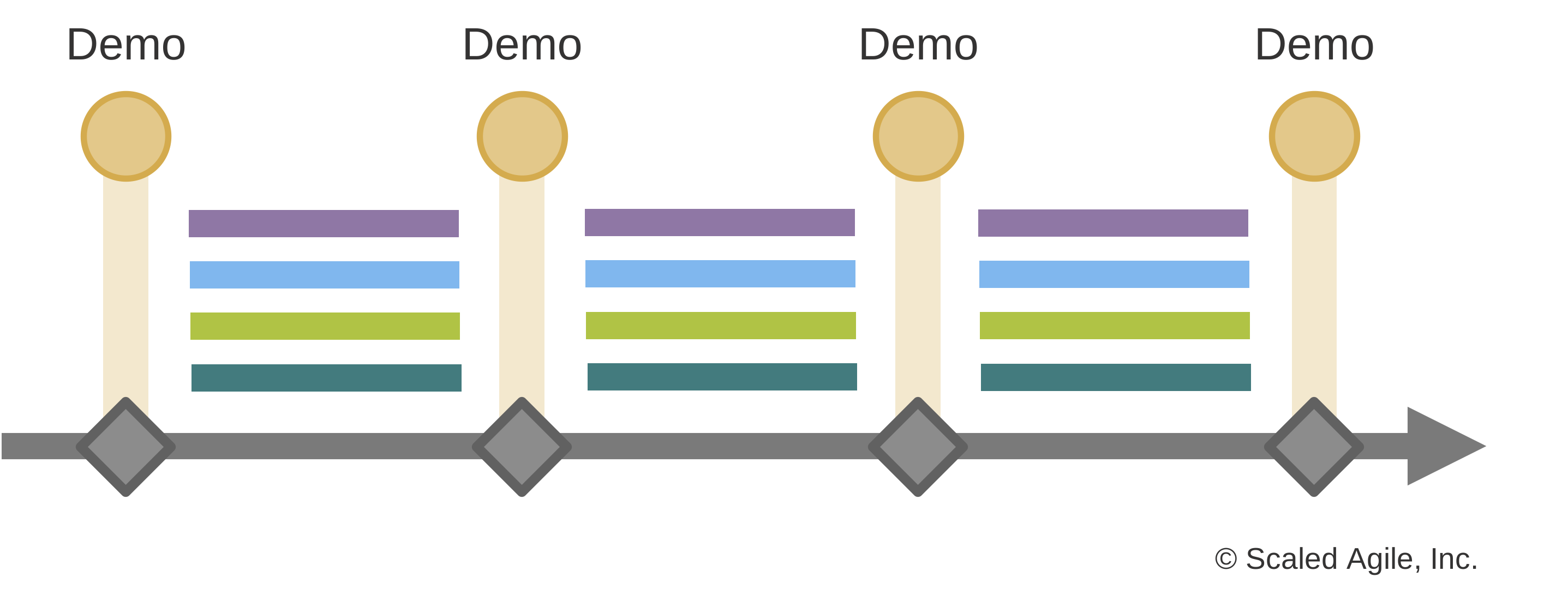
Further, this is done routinely on a cadence which provides the discipline needed to ensure periodic evaluation at predetermined time boundaries. This regular evaluation quickly collapses the field of less desirable options.
Principle 6: Make value flow without interruptions
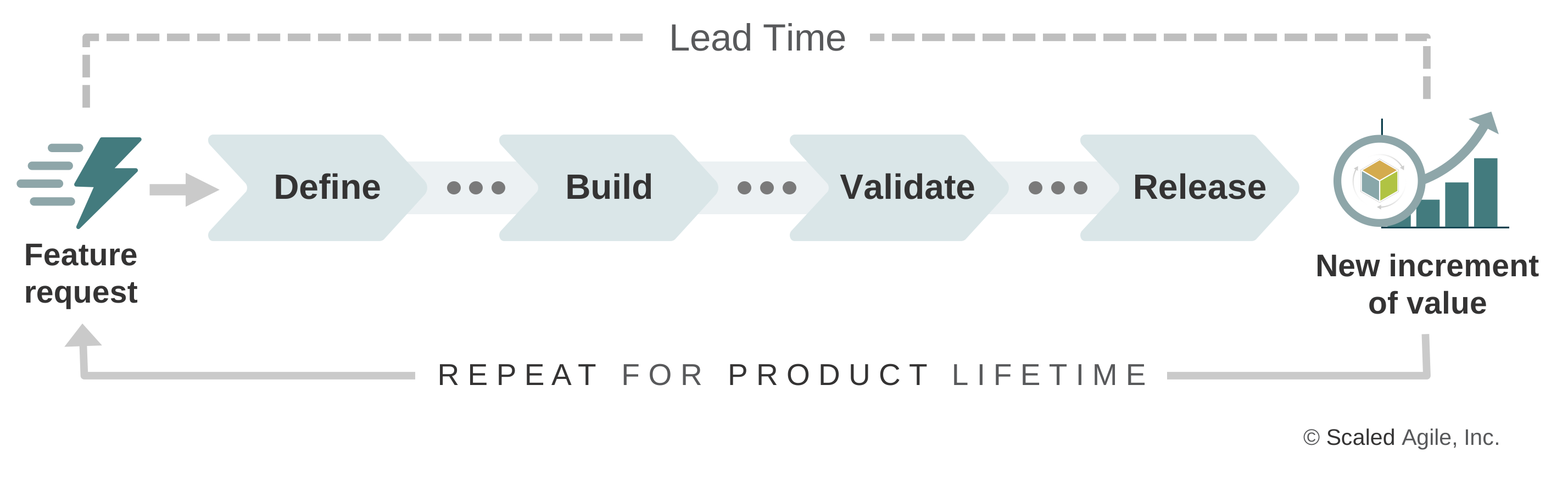
The third principle in Lean Thinking is to ‘make value flow without interruptions.’ Doing so requires an understanding of what flow is, what the various properties of a flow system are, and how these properties can accelerate or impede the flow of value through any particular system.
Flow occurs when there is a smooth, linear, and fast movement of work product from step to step in a relevant value stream. While the details of any flow system are based on its context, all flow systems have eight common properties, as illustrated in the figure below.
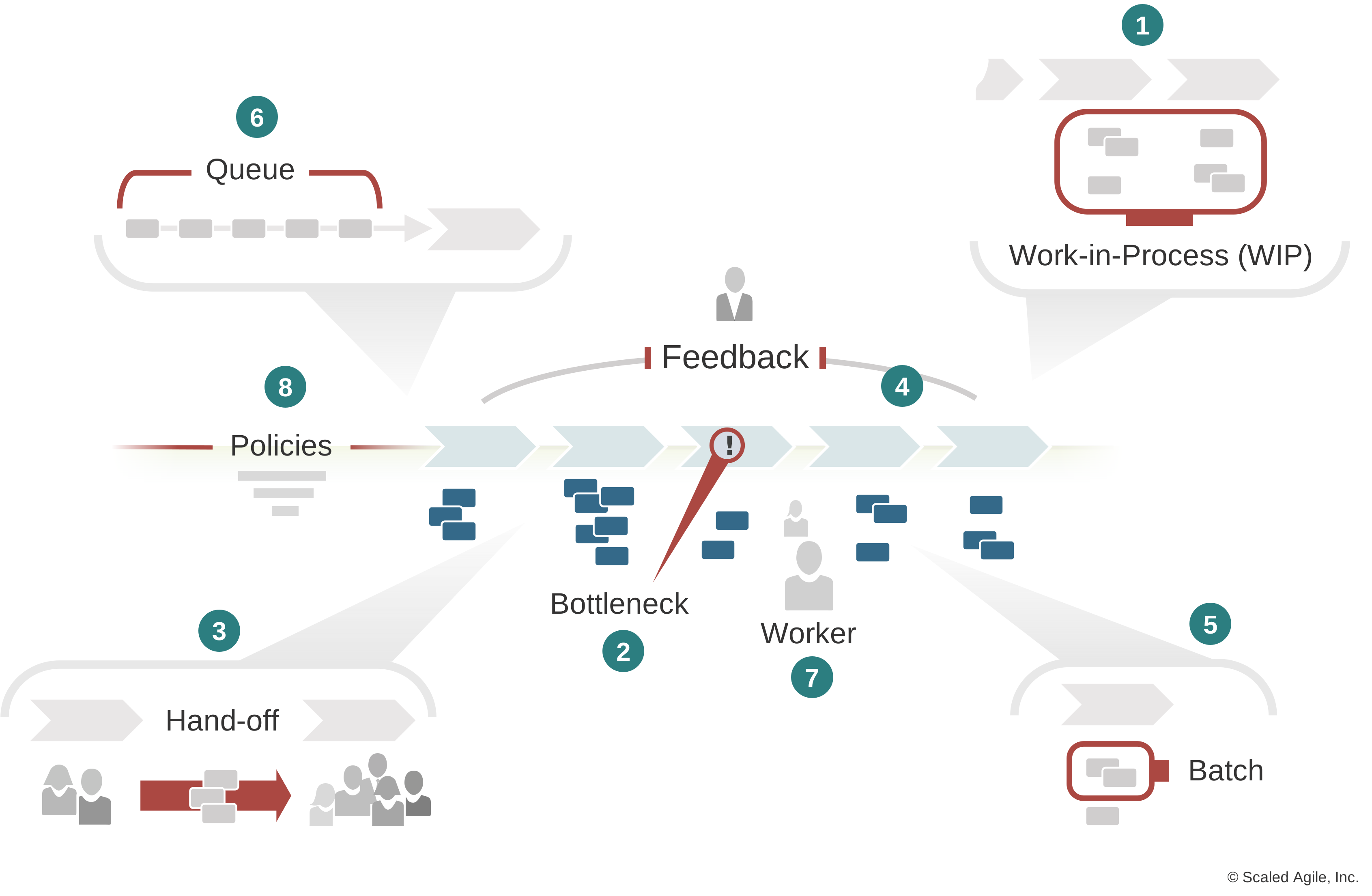
As the principle mentions, making value flow without interruptions can best be achieved by adopting the eight ‘flow accelerators’ described below:
- Visualize and limit WIP
- Address bottlenecks
- Minimize handoffs and dependencies
- Get faster feedback
- Work in smaller batches
- Reduce Queue length
- Optimize time ‘in the zone’
- Remediate legacy policies and practices
Principle 7: Apply cadence, synchronize with cross domain planning
Solution development is an inherently uncertain process. If it weren’t, the solutions would already exist, and there would be no room for the next generation of innovations. This uncertainty conflicts with the need for businesses to manage investments, track progress, and have sufficient confidence in future outcomes to plan and commit to a reasonable course of action.
To address this challenge, Agile development functions best in a ‘safety zone,’ where enough uncertainty provides the freedom to pursue innovation and react to events while providing the confidence the business needs to operate. The primary means to achieve this balance is through objective knowledge of the current state. It’s just more manageable when you know where you really are. This knowledge is gained by applying cadence, synchronization, and periodic cross-domain planning.
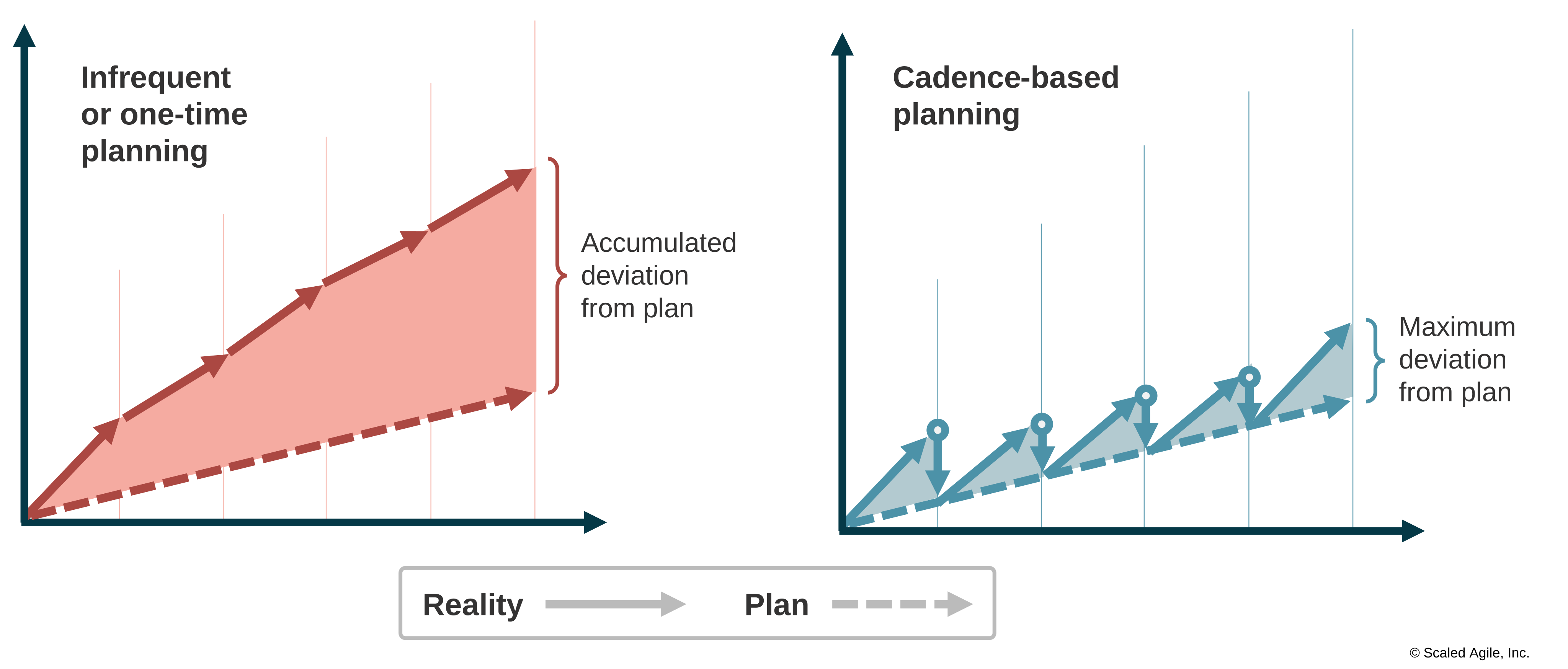
Cadence creates predictability and provides a rhythm for development. Synchronization causes multiple perspectives to be understood, resolved and integrated at the same time. Applying development cadence and synchronization, coupled with periodic cross-domain planning, provides the mechanisms needed to operate effectively in the presence of inherent development uncertainty.
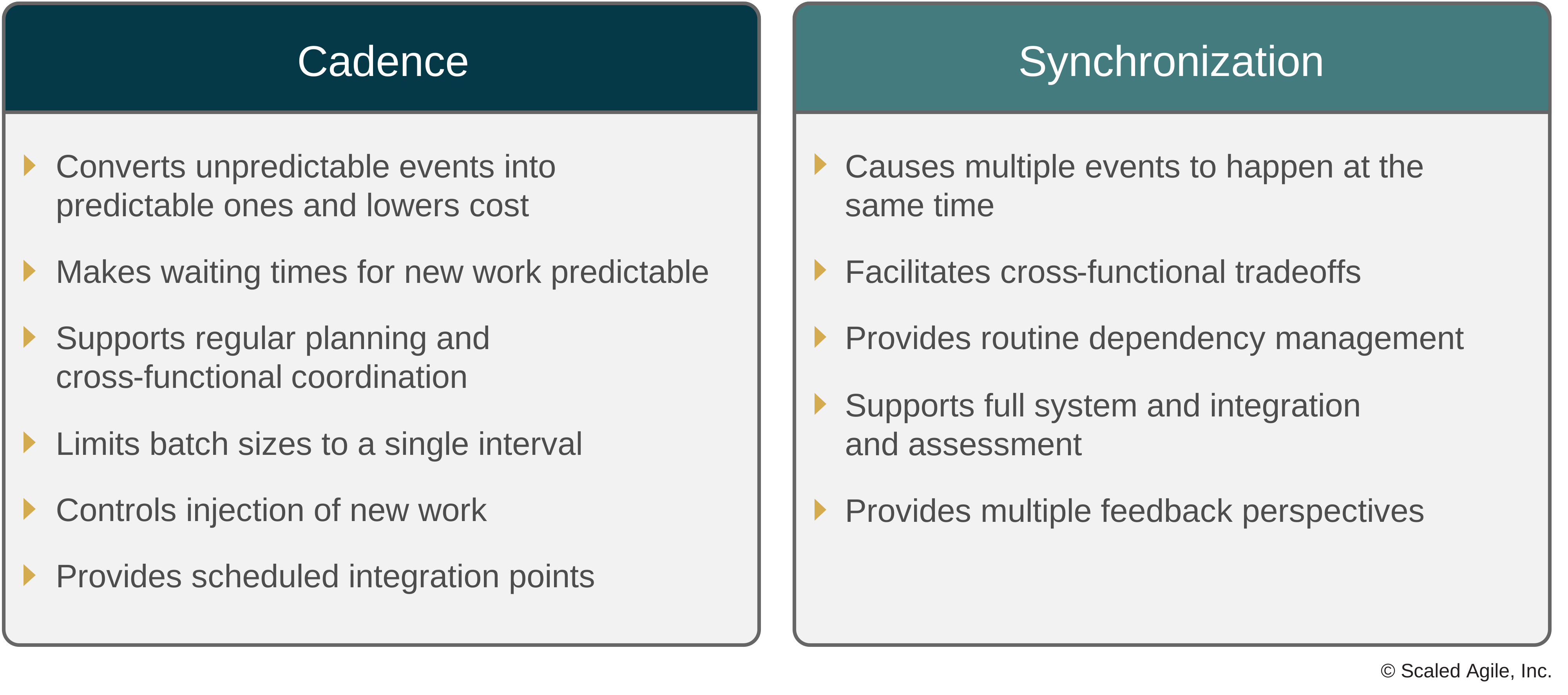
In addition to common cadence, periodic cross-domain planning (for example, PI Planning in SAFe) provides the opportunity for the various aspects of a solution—business and technical —to be integrated and evaluated together at one time. The net effect is managing variability by frequently revisiting and updating the plan. In other words, cadence-based planning limits variability to a single interval.
Principle 8: Unlock the intrinsic motivation of knowledge workers
Lean-Agile leaders understand that ideation, innovation, and employee engagement are not generally motivated by individual incentive compensation. Such individual incentives can create internal competition and destroy the cooperation necessary to achieve the larger aim of the system. This is where leaders today are trying to unlock a different kind of motivation to succeed – intrinsic motivation.
Intrinsic motivation is the drive to perform an activity without any obvious external rewards. Knowledge workers pursue the task because it’s enjoyable and interesting, not because of an outside incentive or pressure. The motivation to do the work is in completing the task itself.
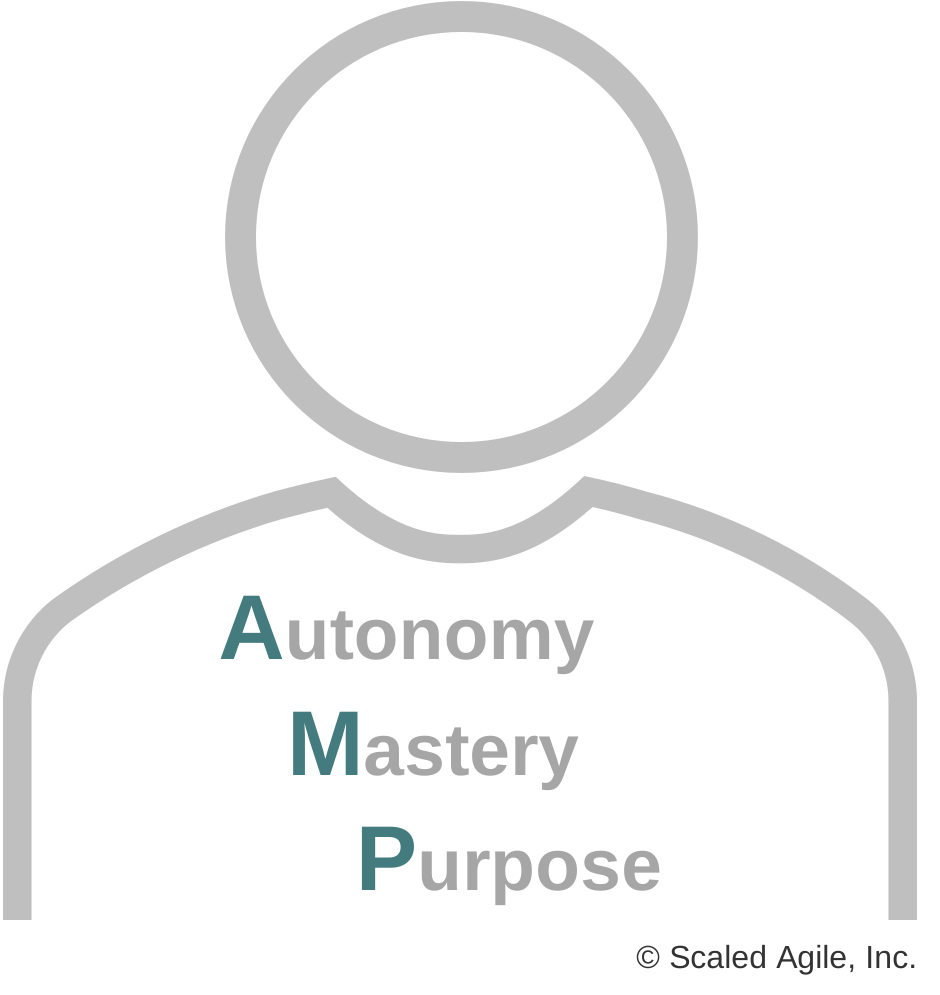
Research demonstrates that enabling intrinsic motivation requires an environment where knowledge workers can exercise autonomy, pursue mastery, and identify with a strong purpose. The primary task of a leader is to create an environment that nourishes this need for autonomy, mastery, and purpose. Few ways leaders can promote these are:
- Decentralizing decision making drives autonomy
- Providing new learning opportunities is ideal for cultivating mastery
- Leveraging synergistic goal setting helps in providing purpose
Principle 9: Decentralize decision making
Creating complex Solutions that capitalize on business opportunities requires swift exploration and experimentation within a short timeframe. This necessitates an approach to decision-making that can handle complexity while prioritizing speed. However, centralized decision making causes a queue of decision requests that block progress and hinders and delays—rather than facilitates—the performance of the people doing the work.
Achieving fast value delivery requires decentralized decision-making. This reduces delays, improves product development flow, enables faster feedback, and creates more innovative solutions designed by those closest to the local knowledge.
Decentralizing decision-making offers many benefits:
- Responsiveness and speed – The pace of decision-making impacts the speed at which the organization can deliver value to its customers. This is often the most significant advantage of decentralized decision-making in complex solution development tasks
- Better decisions – Decentralized decisions are made by those directly exposed to the context of the problem they are trying to solve. This is critical to correctly assessing the situation and making the best decision possible
- Employee motivation – It encourages involvement and a sense of ownership among knowledge workers. It fosters engagement and enables a significant degree of autonomy.
- Alignment– It enables teams and individuals to obtain a more comprehensive view of the mission and focus on developing the best solutions to achieve it rather than following orders
- Collaboration – Many tactical decisions happen between individuals and teams working towards a common goal. Such decisions are often better resolved by those involved than by a centralized role
- Innovation – Self-directed workers are more likely to discover innovative solutions to problems. This is due to their higher autonomy and a better understanding of the context of their work
- Joy of work – People who build the world’s most important systems are intrinsically motivated to do so. That is their purpose. Being empowered to make the decisions they know they are capable of making is personally satisfying and helps restore the joy in the work.
Principle 10: Organize around value
Many enterprises today are organized around principles developed during the last century. In the name of intended efficiency, most are organized around functional expertise. But in the digital age, the only sustainable competitive advantage is the speed with which an organization can respond to the needs of its customers with new and innovative solutions. These solutions require cooperation amongst all the functional areas, with their incumbent dependencies, handoffs, waste, and delays. Instead, Business Agility demands that enterprises organize around value to deliver more quickly. And when market and customer demands change, the enterprise must quickly and seamlessly reorganize around that new value flow.
This principle describes how applying this second operating system frees the enterprise to arrange itself to optimize value delivery. It accomplishes this in three nested parts:
- Build technology portfolios of development value streams
- Realize value streams with product-focused Agile Release Trains (ARTs)
- Form Agile teams that can directly deliver value


Comments
Post a Comment